

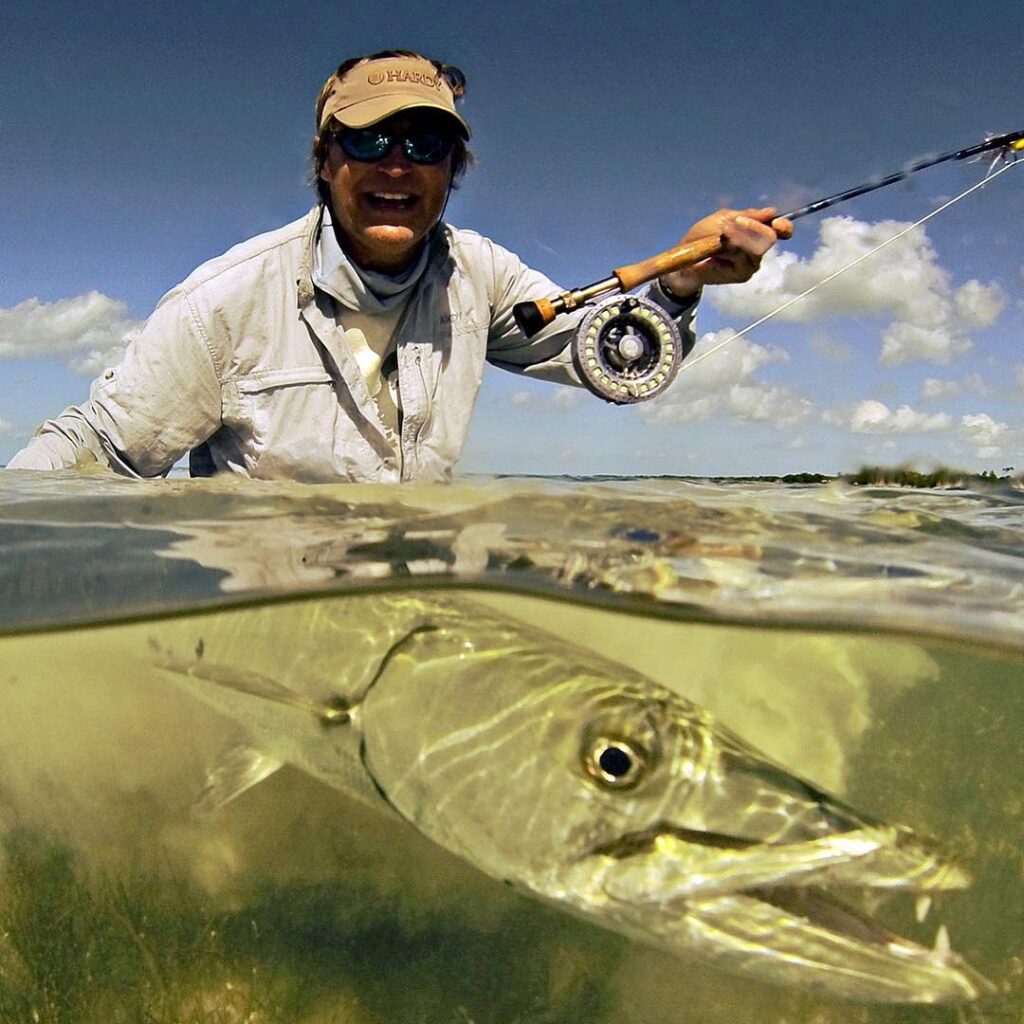
Uncle Bink says: Great day on the water with @rileydalyn got a nice barracuda.
A Powerful Predator of Coastal Waters
The great barracuda (Sphyraena barracuda) is one of Florida’s most recognizable marine predators. With its sleek, torpedo-shaped body, razor-sharp teeth, and lightning-fast speed, the barracuda has earned a reputation as an aggressive and intimidating fish. Found in Florida’s coastal waters, reefs, and mangroves, barracuda play an essential role in maintaining balanced marine ecosystems. Despite their fearsome appearance, they are often misunderstood, and many myths surround their behavior and interactions with humans.
While anglers enjoy catching barracuda for their thrilling fights and acrobatic leaps, these fish are much more than just a sport catch. Their adaptability, hunting efficiency, and role as apex predators make them a fascinating species worth understanding beyond their reputation. With their ability to strike at lightning speed and their role in keeping prey fish populations in check, barracuda are a crucial part of the marine food chain.
In this article, we’ll explore the biology, habitat, behavior, myths, and conservation of Florida’s great barracuda to provide a deeper appreciation for this often-misjudged predator.
Species Overview: The Great Barracuda
The great barracuda (Sphyraena barracuda) is the largest and most well-known species of barracuda, found throughout Florida’s coastal waters. These fish are highly adapted predators with several distinct features that make them formidable hunters.
Physical Characteristics
- Size & Weight – Most barracuda range from 2 to 4 feet in length, though some individuals grow up to 6 feet and weigh over 50 pounds.
- Coloration – Their long, silver bodies help them blend into their surroundings, while dark blotches along their sides provide camouflage.
- Teeth & Jaw Structure – Barracuda have two sets of teeth: small, needle-like teeth for gripping prey and larger, dagger-shaped teeth for slicing through flesh.
- Eyesight – Excellent vision allows them to detect movement from a distance, helping them ambush prey effectively.
Lifespan & Growth
- Barracuda can live up to 14 years, growing rapidly in their first few years.
- Juveniles start in shallow mangroves and seagrass beds, moving to deeper reefs as they mature.
- Their rapid growth rate allows them to become dominant predators early in life, ensuring their survival.
These physical adaptations allow the great barracuda to be one of the ocean’s most efficient ambush predators, capable of lightning-fast strikes on unsuspecting prey. Their combination of speed, agility, and powerful jaws makes them one of the most fearsome hunters in Florida’s coastal waters.
Habitat & Distribution
The great barracuda is a highly adaptable species, found in a wide range of marine environments across Florida and beyond. Their preference for warm, tropical waters allows them to thrive in various coastal habitats.
Where They Live
- Shallow Flats & Mangroves – Juvenile barracuda seek shelter in these areas to avoid larger predators while they grow.
- Reefs & Wrecks – Larger adults tend to inhabit coral reefs, rocky outcrops, and shipwrecks where prey is abundant.
- Open Water – While barracuda prefer structure, they are sometimes found in open water, particularly near schools of baitfish.
- Estuaries & Lagoons – Brackish environments provide a mix of food sources and hiding places for young barracuda.
Geographic Range
- Florida & the Gulf of Mexico – One of the most common predators in Florida’s coastal waters.
- The Caribbean & Western Atlantic – Found throughout the Bahamas, Cuba, and along the coasts of Central and South America.
- Worldwide Distribution – Barracuda populations extend to the Indo-Pacific and parts of the Mediterranean, thriving in warm oceanic regions.
The ability to thrive in such a diverse range of habitats makes the great barracuda a resilient and widespread species, playing a crucial role in marine ecosystems by controlling populations of smaller fish.
Behavior & Hunting Strategy
Barracuda are ambush predators, relying on their speed and sharp teeth to capture prey. Their hunting strategy is based on sudden bursts of acceleration and precise strikes.
How They Hunt
- Speed & Power – Barracuda can reach speeds of up to 36 mph, allowing them to chase down and strike prey before it can escape.
- Ambush Tactics – They often hide near reefs or structures, waiting for an opportunity to lunge at unsuspecting fish.
- Razor-Sharp Bite – Their teeth slice through prey with ease, ensuring a quick kill.
- Target Prey – Mullet, snapper, jacks, and other small reef fish make up the bulk of their diet.
Myths & Misconceptions
Despite their reputation, barracuda are often misunderstood. Here are some common myths:
- Are Barracuda Dangerous to Humans? – While they may appear intimidating, barracuda rarely attack humans unless provoked or mistaken for prey.
- Do Barracuda Attack Boats & Divers? – They are naturally curious but are not known to attack without reason. Shiny objects may attract their attention, leading to misconceptions.
- Are They Good to Eat? – Some barracuda carry ciguatera toxin, making them unsafe for consumption. Smaller barracuda are generally safer to eat.
Conservation & Ecological Role
Barracuda play a vital role in marine ecosystems by controlling fish populations. However, they face threats from habitat loss and overfishing.
Threats to Barracuda
- Overfishing – Seen as a “nuisance” species, they are sometimes killed unnecessarily.
- Ciguatera Toxin Issues – Concerns over poisoning have led to lower populations in some areas.
- Habitat Destruction – Coastal development is reducing their hunting and breeding grounds.
Conservation Efforts
- Bag Limits & Size Regulations – Florida has restrictions on barracuda harvests to maintain healthy populations.
- Encouraging Catch-and-Release – Promoting conservation among anglers ensures future populations remain stable.
The great barracuda is a fascinating and misunderstood predator that plays an important role in Florida’s marine ecosystems. While their fearsome reputation may be exaggerated, they remain one of the ocean’s most efficient hunters. Understanding their behavior, habitat, and ecological role allows us to better appreciate their presence in Florida’s waters. Through conservation efforts and education, we can ensure that barracuda continue to thrive for generations to come.


??
Stud CUDA!??
???????????