
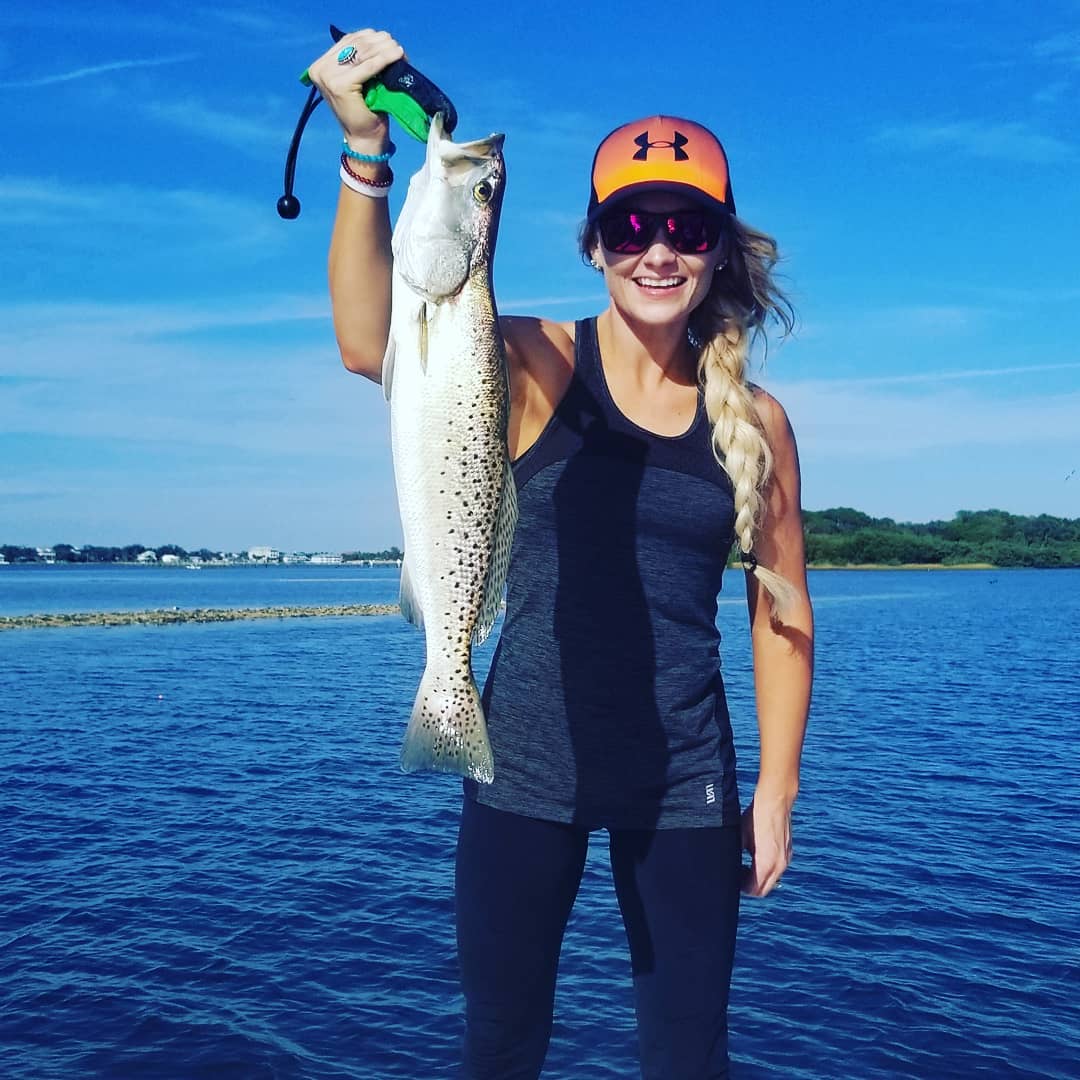
Capt. Jason Clark says: Cindy Jo with a monster 24″ Gator Trout
Understanding Gator Trout (Speckled Trout)
Physical Description
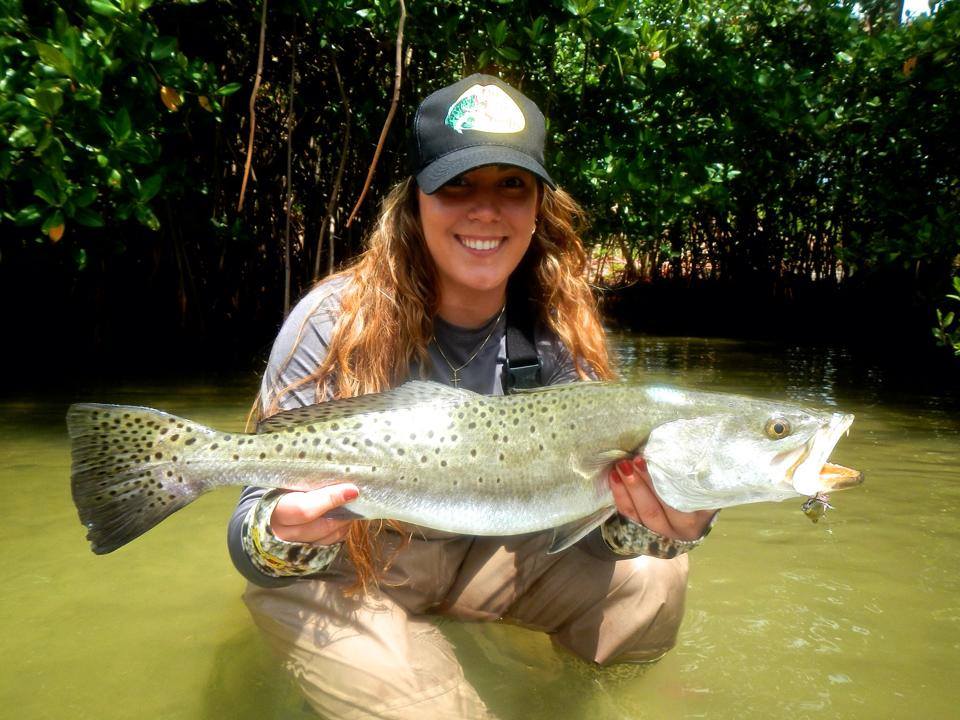
The speckled trout (Cynoscion nebulosus), often referred to as “Gator Trout” when they reach larger sizes, is a saltwater species belonging to the drum family. These fish are known for their elongated, slender bodies with a slightly arched back and a distinctive pattern of dark spots scattered across their silvery, sometimes greenish, sides. Their dorsal fins are separated, with the first fin being spiny and the second soft-rayed. One of the defining features of speckled trout is their large, prominent canine teeth, which aid them in catching prey.
Gator trout specifically refer to specimens that reach trophy sizes, typically exceeding 24 inches in length and weighing over 5 pounds. Some of the largest recorded catches in Florida have surpassed 10 pounds, making them a prized target for anglers.
Habitat & Range
Speckled trout are found throughout the coastal waters of Florida, thriving in estuaries, bays, and lagoons where salinity levels fluctuate. They prefer shallow waters, often between 1-6 feet deep, and are commonly found around grass flats, oyster beds, and sandy bottoms.
These fish are particularly abundant along the Gulf Coast and the Atlantic side of Florida, with some of the best fishing grounds found in locations such as the Indian River Lagoon, Mosquito Lagoon, and Tampa Bay. Their distribution is heavily influenced by water temperature, as they tend to move into deeper channels or warmer waters during colder months, while congregating in shallow flats during warmer seasons.
Gulf Coast vs. East Coast Trout
There are some noticeable differences between speckled trout found along the Gulf Coast and those on Florida’s East Coast.
East Coast Trout: Found primarily in brackish waters, particularly in the Indian River Lagoon and Mosquito Lagoon. These areas feature deeper channels and less extensive seagrass coverage, which impacts their feeding and movement patterns. East Coast trout may be less abundant than their Gulf Coast counterparts but can reach larger sizes due to less fishing pressure in some areas.
Gulf Coast Trout: Tend to thrive in the shallow grass flats, estuaries, and marshes where water temperatures remain stable. The presence of expansive seagrass beds provides excellent habitat for prey species, leading to high trout populations. The Gulf Coast often produces larger numbers of speckled trout due to the abundance of food sources.

Breeding & Lifecycle
Speckled trout spawn multiple times during the warmer months, typically between April and September. Their peak spawning activity occurs around new and full moons when tidal movement is strongest, providing optimal conditions for egg dispersal.
During spawning, females release thousands of eggs, which are fertilized externally by males. The eggs hatch within 24 hours, and the larvae begin their development in shallow, protected estuaries where they find an abundance of food and shelter from predators. Juvenile trout grow quickly, reaching sexual maturity within their first year. The average lifespan of a speckled trout is 5-10 years, although larger Gator Trout tend to be older individuals, often exceeding 7 years of age.
Behavior & Feeding Habits
Speckled trout are opportunistic predators that rely on both sight and lateral line sensitivity to detect movement in the water. They exhibit a strong preference for ambushing their prey rather than actively chasing it.
Their diet primarily consists of small baitfish such as mullet, pinfish, and menhaden, as well as shrimp and crabs. Juvenile trout feed mainly on smaller crustaceans and zooplankton until they grow large enough to consume bigger prey.
Hunting Tactics and Preferred Prey
Trout are ambush predators that use structure and cover to surprise their prey. They prefer hunting near seagrass beds, oyster bars, and sandy drop-offs where baitfish and crustaceans congregate. Unlike other aggressive fish that chase down prey over long distances, trout tend to sit and wait for an opportunity, striking quickly with their sharp teeth.
Trout feeding habits are highly influenced by environmental conditions such as temperature, tides, and light levels:
- Time of Day: Early morning and late evening are peak feeding times, particularly in the summer months when high temperatures push them into deeper, cooler waters during midday. In winter, they tend to be more active during the warmest parts of the day.
- Tidal Influence: Moving tides create ideal conditions for feeding as they bring baitfish into accessible areas. Strong currents around points, sandbars, and inlets often concentrate prey, making these prime locations for targeting trout.
- Seasonal Shifts: During colder months, trout seek out deeper holes and channels, whereas in warmer months, they spread out over grassy flats and shallow estuaries where food is abundant.
Their hunting style is characterized by quick bursts of speed, using their sharp teeth to latch onto prey before swallowing it whole. This predatory behavior makes them highly responsive to topwater lures, soft plastics, and live bait presentations that mimic struggling prey.

Fishing for Gator Trout in Florida
Fishing for Gator Trout in Florida is a rewarding experience that varies significantly by region due to differences in habitat, water temperature, salinity, and bait availability. The state’s diverse coastlines—ranging from the shallow grass flats of the Gulf to the deeper estuarine waters of the Atlantic—offer distinct challenges and opportunities for anglers.
Speckled trout, particularly the larger Gator Trout, display different behaviors and movement patterns depending on the geography and climate of their environment. Factors such as tidal influence, water clarity, seasonal migrations, and baitfish populations all play a role in determining the best approach for catching them. Whether fishing in the seagrass-rich shallows of the Panhandle, the backwaters of the Nature Coast, or the intricate estuarine systems of the southeast, understanding these regional distinctions is key to success.
Below, we break down Florida’s prime trout fishing regions, highlighting specific techniques, seasonal strategies, and recommended gear for each area.
Panhandle (Pensacola, Destin, Apalachicola, etc.)
Overview
The Panhandle is known for its expansive grass flats, estuarine systems, and deep bay waters, making it one of the most productive areas for speckled trout fishing. Cooler temperatures in the winter push trout into deeper channels, while warmer months see them spread out over shallow flats and bayous.
Best Times of Year to Fish
- Spring and fall offer the best trout fishing, as water temperatures are moderate and baitfish populations are abundant.
- Summer months are productive in early mornings and late evenings to avoid extreme heat.
- In winter, trout move to deeper holes and channels where warmer water is present.
Recommended Lures, Baits, and Techniques
- Topwater plugs in the early morning for aggressive strikes.
- Live shrimp and finger mullet fished under popping corks.
- Soft plastic paddle tails worked over grass flats and sandbars.
- Suspending twitch baits for deeper areas where trout hold during colder months.
Nature Coast (Cedar Key, Crystal River, Homosassa, etc.)
Overview
The Nature Coast is characterized by its clear, shallow waters filled with seagrass beds, oyster bars, and tidal creeks. The abundance of structure provides excellent habitat for speckled trout, particularly in cooler months when they move into the backcountry.
Where to Find Them
- Shallow grass flats during warmer months.
- Deeper spring-fed rivers and creeks in the winter.
- Tidal cuts and channels where moving water concentrates baitfish.
Best Approach for Catching Large Trout
- Sight fishing with live pinfish or large shrimp for trophy-sized Gator Trout.
- Working soft jerkbaits and suspending lures along the edges of drop-offs.
- Drifting popping cork rigs over healthy grass flats.
Southwest Florida (Tampa Bay to Ten Thousand Islands)
Overview
Southwest Florida offers a mix of mangrove shorelines, deeper passes, and extensive grass flats that create ideal conditions for speckled trout. Large trout can often be found around mangrove roots and oyster bars where ambush feeding is common.
Top Locations and Prime Conditions
- Tampa Bay’s grass flats and spoil islands.
- Estuarine backwaters near Charlotte Harbor.
- The tidal creeks and mangrove shorelines of Ten Thousand Islands.
Techniques for Targeting Bigger Trout
- Live pilchards or scaled sardines free-lined near mangrove edges.
- Walk-the-dog style topwater lures for explosive surface strikes.
- Jigging with shrimp-tipped soft plastics near deep channels.
Jacksonville & Northeast Florida
Overview
Northeast Florida provides a mix of inshore and estuarine trout fishing, with tidal movements playing a significant role in their location. The St. Johns River and Intracoastal Waterway offer deep channels and grassy shallows where trout congregate.
Differences in Habitat and Tactics
- Strong tidal influence affects trout feeding patterns.
- Mix of freshwater and saltwater species due to river influence.
- Cooler water temperatures lead to a more defined seasonal bite.
Seasonal Variations in Trout Fishing
- Spring and fall: Prime seasons as trout move through tidal creeks and estuaries.
- Winter: Focus on deeper channels and structure.
- Summer: Early morning or nighttime fishing for the best results.
Mosquito Lagoon & Indian River Lagoon
Overview
These interconnected lagoons are famous for their crystal-clear, shallow waters that make them some of the best sight-fishing destinations in Florida. The lagoon system supports a robust population of Gator Trout, with many fish exceeding 25 inches.
Sight Fishing in Clear, Shallow Waters
- Use light fluorocarbon leaders to avoid spooking fish.
- Approach quietly with push poles or trolling motors.
- Cast weightless soft plastics or small live bait near sandy potholes.
Best Methods for Landing Trophy Trout
- Fly fishing with shrimp or baitfish imitations.
- Working topwater plugs over grass flats at dawn and dusk.
- Using live mullet near deeper channels during cooler months.
Southeast Florida (Miami, Biscayne Bay, etc.)
Overview
The southeast region of Florida has fewer large trout compared to other parts of the state, but quality fish can still be found in specific locations such as Biscayne Bay and northern estuarine areas.
Challenges of Trout Fishing in This Region
- Warmer water temperatures reduce trout density.
- Less expansive seagrass beds compared to other Florida regions.
- Increased fishing pressure and boat traffic.
Best Lures and Techniques for Local Conditions
- Early morning topwater lures over grass flats.
- Soft plastics on jig heads worked along channel drop-offs.
- Live shrimp drifted near bridge pilings and inlet mouths.
Conclusion
Fishing for Gator Trout in Florida offers a unique and diverse experience across the state’s many coastal regions. From the vast grass flats of the Panhandle and Nature Coast to the structured waters of the Indian River Lagoon and Southwest Florida, each area presents its own set of challenges and rewards.
Understanding the behavior, feeding patterns, and seasonal movements of speckled trout is key to a successful fishing trip. By using the right baits, lures, and techniques tailored to each region, anglers can maximize their chances of landing trophy-sized Gator Trout. Whether you prefer sight fishing in clear waters or working deep channels in winter, Florida’s inshore fisheries provide an abundance of opportunities for both novice and experienced anglers alike.

?
?
@condabon97
@condabon97
@condabon97
@dgetz88 we need to get out and go fish!
Solid???